The Peptide Woman’s unfinished account of care
A concern can enter a medical record without a response following it. I resent an acknowledgement that has no visible sequel. A drug benefit still has to earn its place in the response.

A gap in primary care
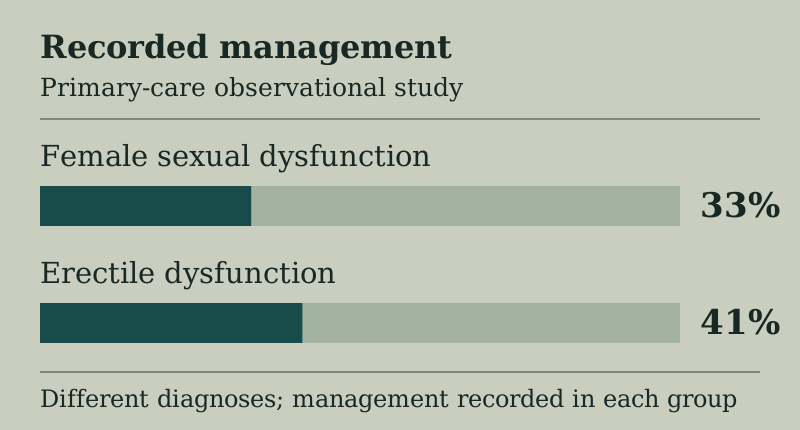
A primary-care study of sexual dysfunction records reported management for 33% of patients with female sexual dysfunction, compared with 41% of those with erectile dysfunction. Its populations comprised 6540 patients with female sexual dysfunction and 16,591 with erectile dysfunction. The comparison describes recorded management across those diagnoses; it cannot stand in for a trial of a particular medicine.
I resent the ease with which a concern can become the end of a record. A diagnosis supplies a name. Whether anyone responds to the problem is a further question, and the study's gap gives that question some weight.
Attention and a worthwhile benefit
I want a woman's distress to receive a fair hearing. That sympathy does not settle the case for a drug. Bremelanotide improved desire scores and reduced desire-related distress in the RECONNECT trials, which enrolled premenopausal women with hypoactive sexual desire disorder, or HSDD.
There is an argument to have about the size of that benefit. A review of HSDD pharmacotherapy describes limited efficacy and potential adverse effects. Taking that criticism seriously leaves plenty of room to object to a sexual-health concern being passed over. A small benefit needs an honest account of its size; a troubling symptom deserves a response even when the available drug leaves much to be desired.
The next entries
The care records come first: what the management gap describes, and the explanations it cannot supply. Low desire and diagnosis follows the disagreement over who gets a diagnostic label and what that label means.
The desire trials put the drug's results beside a published criticism of enjoyable sexual experiences. Tolerability gives nausea and cardiovascular cautions their own space. An argument about taking women seriously loses me if it rushes past an unpleasant effect.